我們沒有比較厲害,只是比較幸運
Not More Skilled — Just Luckier
一個公寓頂加的 OHCA,一個沒有惡意的弟弟,和一個夾在悲痛與無法究責之間的姊姊。這篇隨筆寫的不是救護技術,而是我們以為自己在評判別人的那個瞬間。
An OHCA call in a walk-up apartment, a brother with no harmful intent, and a sister caught between grief and the impossibility of blame. This is not a story about EMS technique. It is about the moment we think we are judging someone else.
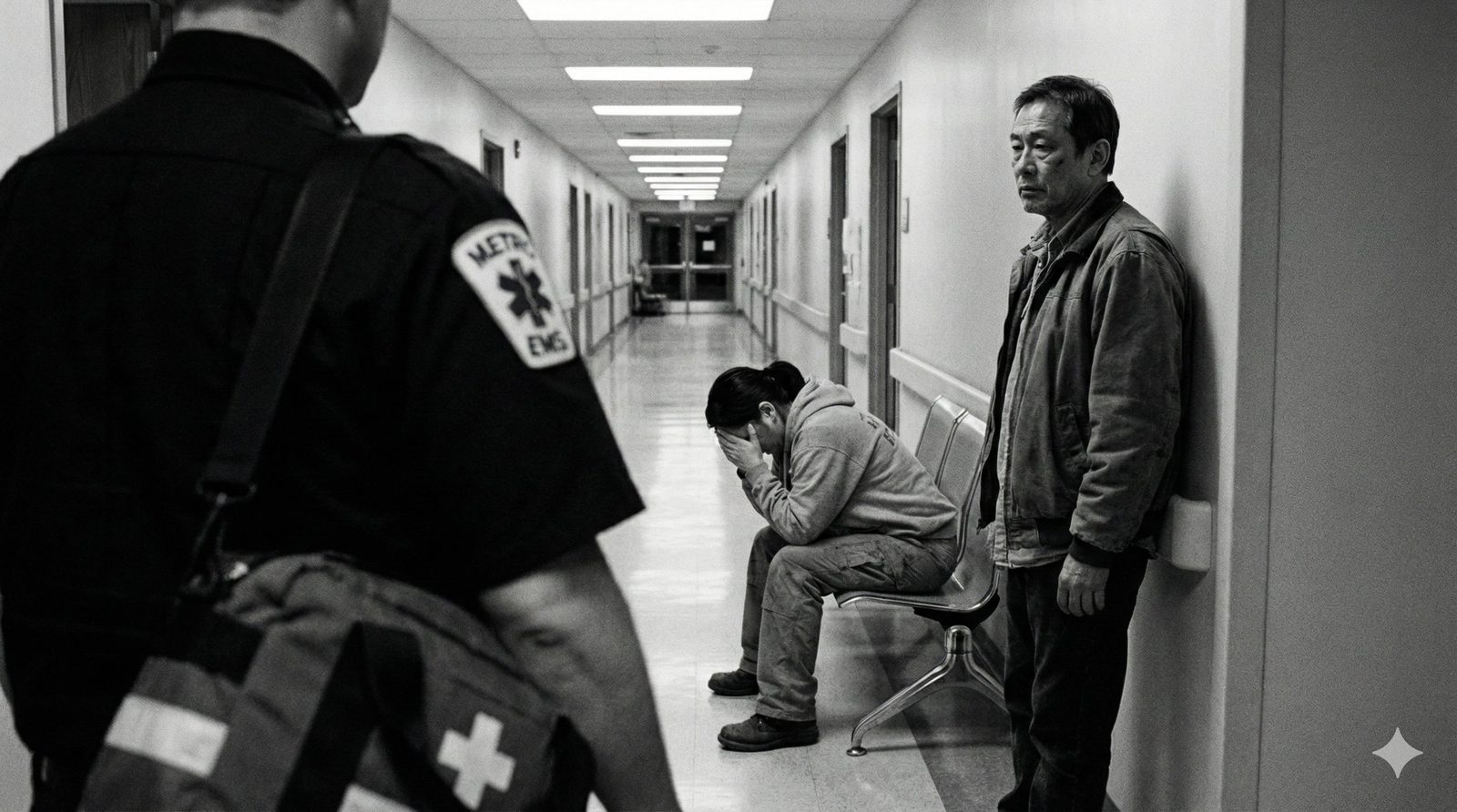
註:本文由真實執勤經驗改編。為保護當事人隱私,相關時間、地點、人物背景與病情細節均已進行去識別化與模糊處理。
公寓頂加,沒有電梯。推開門,空氣裡混雜著尿騷味和動物的氣息。那是救護員很熟悉的味道,一種被生活壓得喘不過氣的味道。
救護通報單寫著:糖尿病、冒冷汗。這種案件跑多了,可能打支針、補個糖,也許連醫院都不用去。但目光所及只有一片狼藉,和地上躺著冰冷的——對,那個人的心跳,早就停了。
旁邊站著一個中年男子,手足無措地看著我們。那是患者的兒子。
「為什麼現在才報案?」這是我當下最想吼出來的一句話。從下午昏迷到晚上,漫長的時間裡,兒子唯一的處置竟是餵爸爸喝糖水,然後讓他繼續躺在地上。「我以為爸爸只是在睡覺。」兒子說。
專業人員的憤怒在腦中炸開。怎麼可能?怎麼會有人覺得這種天氣睡在地板上是正常的?太荒謬了。我們在狹窄髒亂的樓梯間搬運、急救,汗水流進眼睛裡,心裡全是對這家人「疏忽」的批判。
送進急救室後,我冷靜了下來。我看見剛下班趕回來的姊姊,一身疲憊;再看看那個在一旁、顯得有些狀況外的弟弟。
在醫院明亮的燈光下,我才終於看清楚弟弟的眼神——那種無法聚焦的茫然、答非所問的反應。原來,這不是疏忽,這是他認知能力的受限。
原本燒在心頭的怒火,瞬間變成了一股酸楚的愧疚。但最讓我難受的,是轉頭看見姊姊當下的表情。
這對她太殘忍了。剛下班就直面父親可能救不回來的噩耗,心裡的悲痛正要炸開,卻發現晚求救的原因,竟是那個她必須照顧、卻又無法理解生死的親弟弟。
想哭不能哭,想罵不能罵。
她知道不能怪弟弟,因為他不懂。我看著她夾在喪父之痛與無法究責的無力感中間,嘴唇咬得死白。整個人像是被抽乾了靈魂,處在崩潰邊緣搖搖欲墜。
弟弟的世界很簡單:爸爸不舒服給糖水,爸爸不動就是在睡覺。他沒有惡意,他只是不知道。
離開前,我看著獨自扛起家計的姊姊,心裡充滿抱歉——抱歉剛才在心裡那樣嚴厲地審判了他們。
我走過去輕聲說:「保重,加油。」她紅著眼眶點點頭,一句話也說不出來。
我們沒有比較厲害,我們只是比較幸運。幸運到不需要面對那樣的絕境,去驗證自己是否能做得更好。
願每個人都能在艱難的時刻,依然選擇善待他人。
Note: This piece is adapted from real fieldwork. Identifying details — time, location, personal background, and medical specifics — have been anonymized to protect privacy.
A walk-up apartment, no elevator. We pushed the door open. The air carried the smell of urine and animals — a smell EMS workers know well, the smell of a life pressed down past the point of breath.
The dispatch note said: diabetes, cold sweats. After enough calls like this, you expect to push a little glucose, maybe skip the hospital altogether. But what we found was a room in disarray, and a body on the floor, already cold. His heart had already stopped.
A middle-aged man stood nearby, hands helpless at his sides. He was the patient's son.
"Why did you wait so long to call?" That was what I wanted to shout. From that afternoon until evening, his only response had been to try feeding his father sugar water and let him lie on the floor. "I thought he was sleeping," the son said.
The anger of a professional exploded in my head. How could anyone think this was normal? How could someone let this go on for hours? We moved through the cramped, filthy stairwell doing compressions, sweat in our eyes, the whole time silently judging this family for their neglect.
In the emergency room, I slowed down. I saw the sister arrive — just off work, exhausted. And I looked again at the brother who had been standing there, slightly off to the side, not quite tracking the conversation.
Under the hospital lights, I finally saw it clearly: the unfocused look in his eyes, the answers that didn't match the questions. This was not negligence. This was cognitive limitation.
The anger dissolved into something sharper and worse — guilt.
But what hurt most was the sister's face. She had just come from work to learn her father might not survive. Her grief had barely formed when she understood why the call had come so late: because of the brother she had always protected, who could not understand what death meant, and could not be blamed for it.
No space to cry. No one to blame.
I watched her standing between the loss of her father and the impossibility of anger, lips bitten white, as if the life had been drawn out of her.
The brother's world was simple: father feels bad, give him sugar water; father isn't moving, he must be sleeping. No malice. He simply did not know.
Before we left, I looked at the sister — the one who had been carrying everything — and felt the weight of what I had done in my own mind while we were working: the quiet, certain judgment of people I knew nothing about.
I went to her and said quietly: "Take care of yourself." She nodded, eyes red, unable to speak.
We were not more skilled. We were only more lucky — lucky enough never to have been tested the way they were.
I hope that when things are hard, people can still choose to be kind to each other.