Cyanokit 到院前配置推動
Bringing Hydroxocobalamin to Prehospital EMS in Taiwan
把火場濃煙氰化物中毒的國際證據——AHA 2025 指引與 Houston Fire Department 經驗——轉化為新北市到院前 Hydroxocobalamin 配置的代表案例。從醫學論述、制度討論、人員訓練,到第一次派遣啟動。
Translating international evidence on fire smoke cyanide poisoning — AHA 2025 guidance and Houston Fire Department's deployment experience — into a working prehospital Hydroxocobalamin configuration in New Taipei City. From clinical reasoning to dispatch-level activation.
問題:為什麼火場需要這個解毒劑
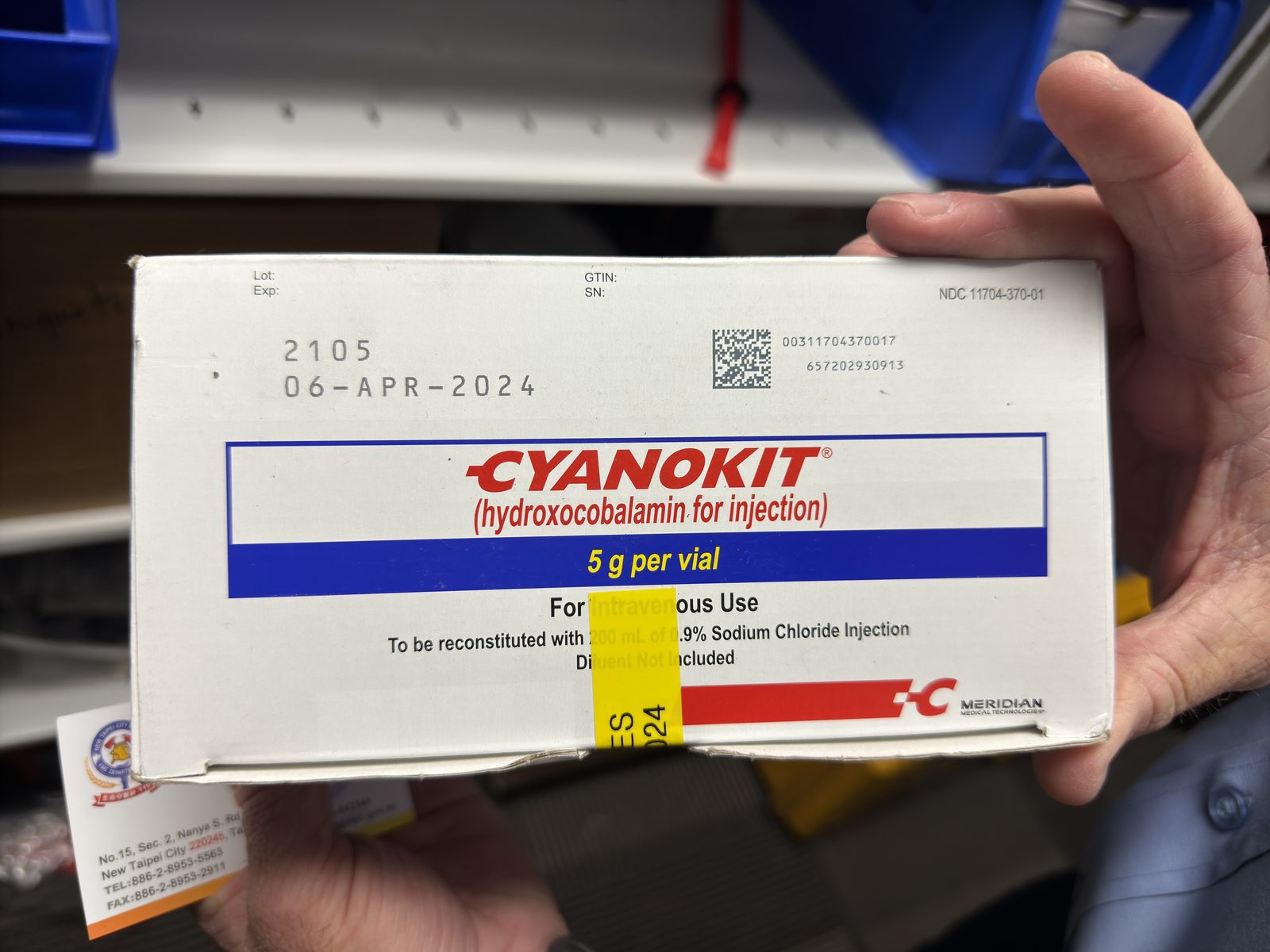
火災煙霧不是單一毒物。除了大家熟悉的一氧化碳,現代建築與家具大量使用的合成材料——地毯、沙發、PVC、聚胺脂泡綿——燃燒時都會釋出氰化氫。這已被國際急診與 EMS 文獻長期記載,是火場救護員與民眾共同面對的職業與環境暴露。
處置上,高濃度氧氣可以處理一氧化碳,但對氰化物中毒無效。氰離子抑制細胞色素氧化酶,使細胞在血氧充足的情況下仍無法用氧——出現代謝性酸中毒、意識改變、心跳停止。如果到院前處置只有氧氣,遇到複合性中毒時工具不完整。
解方:Hydroxocobalamin(Cyanokit)
Hydroxocobalamin 的三價鈷離子可與氰離子結合,形成無毒的氰鈷胺(cyanocobalamin),由腎臟排出,迅速恢復細胞呼吸鏈功能。相較於傳統 Cyanide kit(亞硝酸鈉+硫代硫酸鈉),它在到院前環境的安全性顯著較佳。
| 項目 | 傳統 Cyanide kit (亞硝酸鈉 + 硫代硫酸鈉) |
Cyanokit (Hydroxocobalamin) |
|---|---|---|
| 機轉 | 誘導高鐵血紅素以結合氰離子;以硫基轉化為硫氰酸鹽 | 三價鈷直接結合氰離子形成 cyanocobalamin 排出 |
| 影響血液攜氧 | 會降低(誘導 metHb) | 不影響 |
| 低血壓風險 | 有(亞硝酸鈉導致血管擴張) | 無顯著影響 |
| 合併 CO 中毒可用 | 不建議 | 可使用 |
| 到院前耐受性 | 需慎用、監測複雜 | 適合到院前使用 |
| 對未中毒者誤用 | 有風險 | 相對安全 |
AHA 2025 指引建議
2025 年 American Heart Association《Part 10: Adult and Pediatric Special Circumstances of Resuscitation》明確建議:
- 對成人生命危急的氰化物中毒,應立即給予 hydroxocobalamin(Class 1,LOE C-LD)。
- 若無 hydroxocobalamin,可使用「亞硝酸鈉 + 硫代硫酸鈉」(Class 1,LOE C-LD)。
- 若同時暴露於 CO + CN(如住宅火災)且無 hydroxocobalamin,可單獨給予硫代硫酸鈉(Class 2a,LOE C-EO)。
- 對生命危急或高度懷疑氰化物中毒者,不應等待檢驗確認;應依臨床表現、現場暴露風險與醫療指導及早處置。
- 小兒族群建議原則相同(Class 1,LOE C-EO)。
關鍵語:時間就是生命,尤其在密閉空間火場煙霧暴露的急救場景。
為什麼放在到院前
如果這個藥只放在醫院藥局,從現場倒下到取得藥之間的時間,往往已經錯過救命的黃金窗口。各國先進 EMS 系統普遍把這個藥配置到「會到火場」的單位上,配合具備進階技能的高級救護技術員(EMT-P / paramedic)執行。
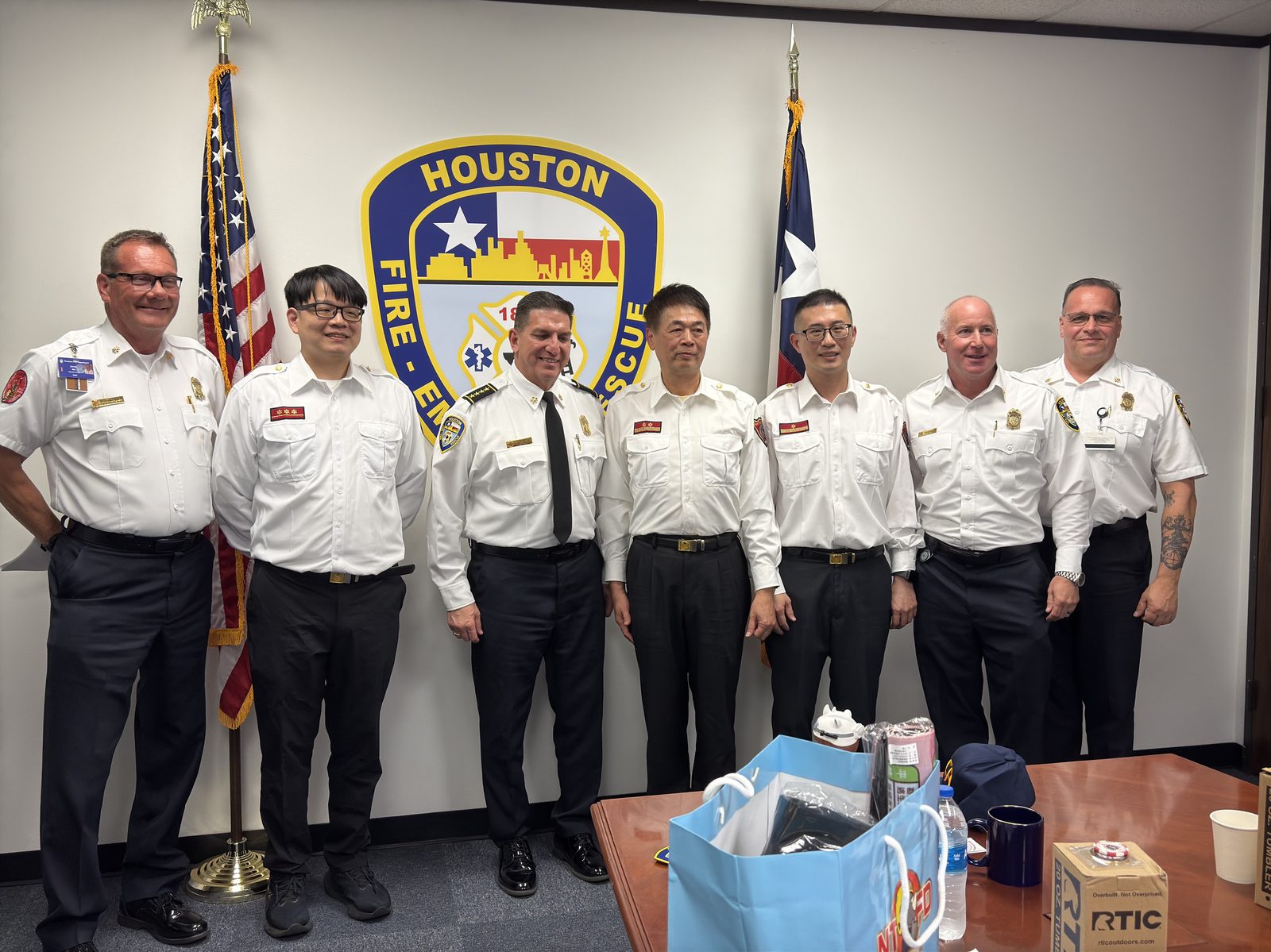
Houston Fire Department 的經驗可作為操作參照——他們把藥配置在 10 輛 EMS 督察車(EMS Supervisor vehicles)+ 21 輛區指揮官車(District Chief vehicles),不放在每個分隊。原因是這些車「一定會到任何顯著火警」,密度比放在每個救護隊更實際;且他們的給藥標準是「吸入性傷害合併意識改變或生命徵象異常」,採經驗性給藥,不等實驗室結果。
新北市的配置邏輯
2025 年 11 月,新北市消防局取得三瓶 Hydroxocobalamin。對 2,052 平方公里、四百多萬人口的轄區而言,數量遠遠不夠涵蓋全部火場——必須採取最大化價值的配置策略。
參照 HFD 邏輯,藥被放在「最有可能到火場、且現場有人會用」的位置:
- 兩個 TP+ 高階救護單位——具備進階給藥能力,啟動快、調度跨區可達
- 一個特搜分隊——大型火警常見出勤單位,配備齊全
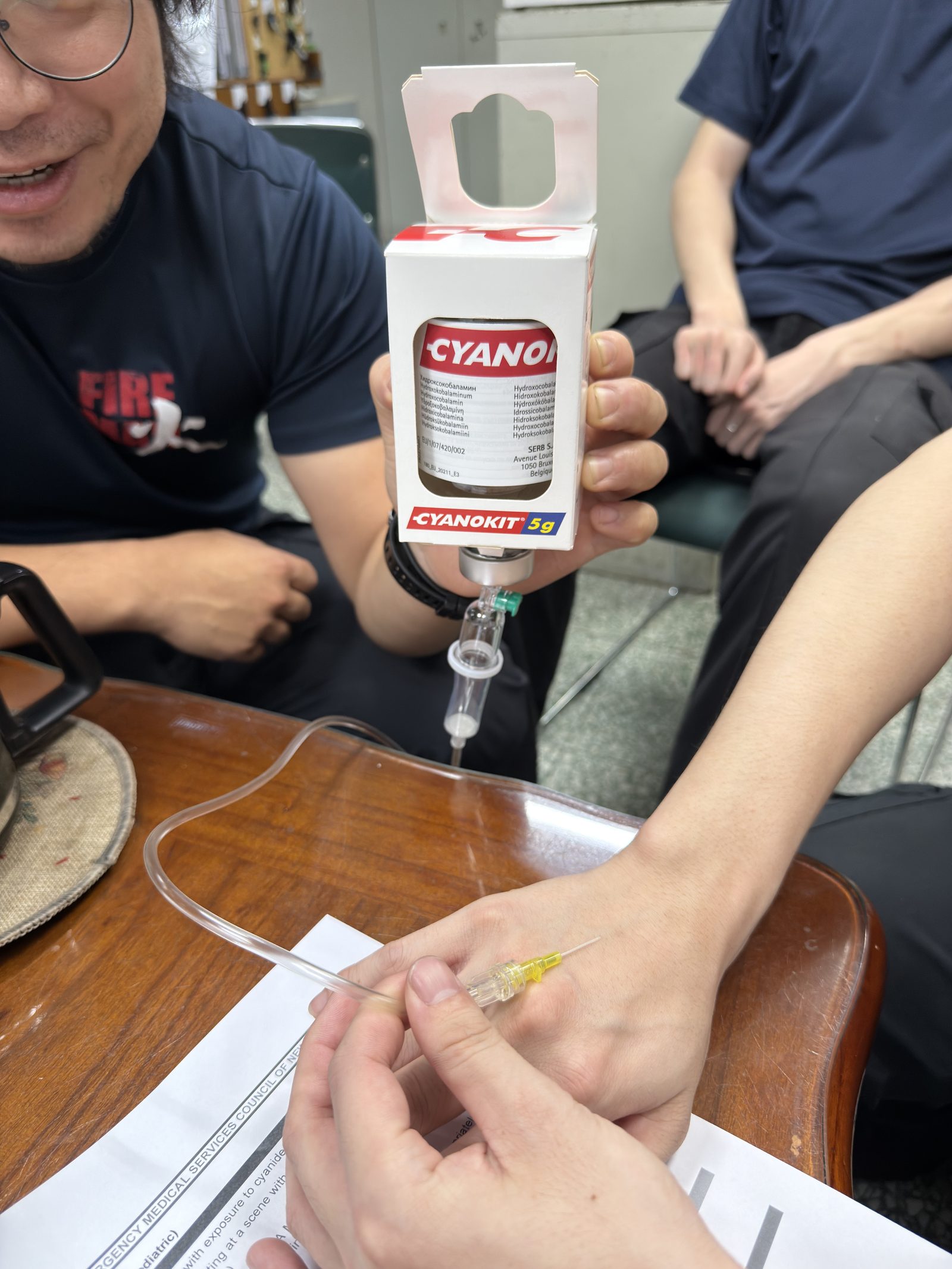
這三個位置不是「藥放在這裡」,而是「現場最有可能用得到、也最有人會用的位置」。配套包括醫諮會議審查、本局氰化物解毒劑使用流程函、Cyanokit Demokit 訓練、適應症與調度原則訓練。
落地進度
2026 年春,本案完成首次實戰啟動。派遣中心首次在文字記錄上發出指令:
該次事件為工業火警,最後未實際給藥,但「派得出來」這四個字,是過去十一年沒有過的東西。每一次派遣啟動——無論最後是否給藥——都會成為日後制度檢討、醫諮回饋與訓練修正的真實資料。
後續方向
三瓶不是終點。下一階段的工作包括:
- 累積派遣案例資料,作為後續擴增配置的論述基礎
- 與衛福部毒物管理中心持續溝通到院前配置的價值
- 跨縣市分享操作經驗,協助有意願的單位導入
- 持續更新訓練教材,因應 AHA 與國際 protocol 的修訂
公開佐證
- 2024-11 赴美參訪:新北市公開出國報告 C114AB007
- AHA 2025 指引:Adult and Pediatric Special Circumstances of Resuscitation
- 2025-10 TEMS Newsletter 發表:在地創新:別再在火災現場「無能為力」——推動到院前配置 Hydroxocobalamin
- 其他細節(信件往來、配置紀錄、派遣紀錄)屬機關或個人紀錄,可向作者查詢。
合作與延伸
這個案例適合延伸成:高風險低頻率藥物導入流程設計、火場煙霧複合毒物的醫諮與訓練教材、跨機關(消防/醫療/衛政)制度落地溝通範例。歡迎第一線單位、醫諮醫師、地方主管機關、國際同行交流。
The Problem: Why Fires Need This Antidote
Smoke from a structure fire is not a single toxin. Beyond the well-known carbon monoxide, modern buildings and furniture rely heavily on synthetic materials — carpets, upholstery, PVC, polyurethane foam — which release hydrogen cyanide when burned. This is well documented in international emergency medicine and EMS literature as a combined occupational and environmental exposure for firefighters and the public.
Clinically, high-flow oxygen handles CO but does nothing for cyanide. Cyanide blocks cytochrome c oxidase, so even with adequate blood oxygen the cells cannot use it — leading to metabolic acidosis, altered consciousness, and cardiac arrest. If the prehospital toolkit is limited to oxygen, it is incomplete for combined CO + CN exposures.
The Solution: Hydroxocobalamin (Cyanokit)
Hydroxocobalamin's cobalt(III) center binds cyanide directly to form non-toxic cyanocobalamin, excreted renally, restoring cellular respiration rapidly. Compared to the traditional Cyanide kit (sodium nitrite + sodium thiosulfate), it has a markedly better safety profile in the prehospital environment.
| Property | Traditional Cyanide kit (Sodium nitrite + Sodium thiosulfate) |
Cyanokit (Hydroxocobalamin) |
|---|---|---|
| Mechanism | Induces methemoglobinemia to bind cyanide; thiosulfate converts cyanide to thiocyanate | Cobalt(III) directly binds cyanide → cyanocobalamin, renally excreted |
| Effect on oxygen-carrying capacity | Reduces (induces metHb) | No effect |
| Hypotension risk | Yes (sodium nitrite vasodilation) | Minimal |
| Use with concomitant CO poisoning | Not recommended | Acceptable |
| Prehospital tolerability | Caution; complex monitoring | Suitable for prehospital use |
| Empirical use in non-poisoned patient | Risky | Relatively safe |
AHA 2025 Recommendations
The 2025 American Heart Association update "Part 10: Adult and Pediatric Special Circumstances of Resuscitation" states:
- For adult life-threatening cyanide poisoning, hydroxocobalamin should be administered immediately (Class 1, LOE C-LD).
- If hydroxocobalamin is unavailable, sodium nitrite + sodium thiosulfate may be used (Class 1, LOE C-LD).
- For combined CO + CN exposure (e.g., residential fires) without hydroxocobalamin, sodium thiosulfate alone may be considered (Class 2a, LOE C-EO).
- For life-threatening or highly suspected cyanide poisoning, do not wait for laboratory confirmation; treat early based on clinical findings, exposure risk, and medical direction.
- Pediatric guidance follows the same principles (Class 1, LOE C-EO).
The operative principle: time is life, particularly in enclosed-space fire smoke exposure.
Why Prehospital
If this drug stays in the hospital pharmacy, the time between collapse on scene and access to the antidote often passes the window where it matters most. Advanced EMS systems internationally place the drug on units that respond to fires, with paramedics trained to administer it.
Houston Fire Department's deployment is a useful reference. They place Cyanokit on 10 EMS Supervisor vehicles and 21 District Chief vehicles, rather than every fire station. The reason: those units are dispatched to every working fire — better density than spreading it across every house. Their administration threshold is empirical: inhalation injury with altered mental status or abnormal vitals, no waiting for labs.
The New Taipei Configuration
In November 2025, the New Taipei City Fire Department received three vials of Hydroxocobalamin. For a service area of 2,052 km² and a population of over four million, three vials cannot blanket every fire — it requires a placement strategy that maximizes value.
Adapting HFD's logic, the vials were placed where the drug is most likely to reach a fire scene with paramedics on board:
- Two TP+ advanced life support units — capable of advanced administration, fast activation, cross-district mobility
- One urban search and rescue team — routinely deployed to major fires, fully equipped
These three locations were not selected because the drug "lives there." They are where the drug is most likely to be needed and to be used by trained personnel. Implementation included medical advisory committee review, an internal cyanide antidote protocol, Cyanokit Demokit hands-on training, and indication and dispatch protocol education.
Field Activation
In spring 2026, the protocol was activated for the first time. The dispatch center, for the first time in writing, issued the order:
The incident was an industrial fire. The drug was not administered, but the fact that it could be dispatched — those words appearing in writing — is a capability that did not exist for eleven years. Each activation, whether or not the drug is given, becomes real-world data for protocol review, medical advisory feedback, and training refinement.
Next Steps
Three vials is not the end. Ongoing work includes:
- Accumulating activation data to support expansion of placement
- Continued dialogue with the Ministry of Health and Welfare's toxicology unit on the value of prehospital placement
- Cross-jurisdictional sharing with EMS systems interested in implementation
- Continual update of training materials in response to AHA and international protocol revisions
Public Documentation
- 2024-11 Visit to the United States: New Taipei City Government public overseas mission report C114AB007
- AHA 2025 Guidelines: Adult and Pediatric Special Circumstances of Resuscitation
- 2025-10 TEMS Newsletter publication: "Local Innovation: No Longer Powerless at the Fire Scene — Bringing Hydroxocobalamin to Prehospital Care"
- Other documentation (correspondence, deployment records, dispatch logs) is held internally and may be discussed on request.
Collaboration
This case is well suited to collaboration on: high-risk low-frequency drug implementation design; medical advisory and training materials for fire smoke combined toxicity; cross-agency (fire / medical / public health) protocol rollout. Open to engagement from frontline units, medical directors, local authorities, and international peers.
Read the personal story behind this work — eleven years from a loss to an open door →